
Unless you’ve been living in a cave on Titan III, you should now be aware of the recent news that Doctor Who showrunner supremo and head writer Steven Moffat is hanging up his scarf in 2017 to pave the way for incoming executive producer and new showrunner Chris Chibnall in 2018. Although having proved to be a divisive figure in the past for Doctor Who fans, I still earnestly believe that Chris Chibnall is an exciting prospect for the show. In this article, I will provide a cursory examination of each of the five episodes of Doctor Who written by Chibnall to date, which are all a clear indication of his worthy credentials to become the next man in charge of the TARDIS. I love Chris Chibnall, he is a nice man! And he is a talented man!
42
★★☆☆☆
TX: 19/5/2007
Written by Chris Chibnall Directed by Graeme Harper
Chris Chibnall was the head writer for the first two series of the adult Doctor Who spin-off Torchwood, for which he wrote acclaimed episodes like Countrycide, End of Days, Kiss Kiss Bang Bang, Adrift, Fragments, Exit Wounds, but also divisive episodes like Day One and Cyberwoman. Chibnall therefore already had some knockout scripts under his belt by the time 42 came around, marking his writing debut on Doctor Who proper. As first outings go, this episode represents a solid start. A spaceship crashing into the sun, 42 minutes to save it and a murderer aboard picking off the crew “one by one” as Captain O’Donnell states.
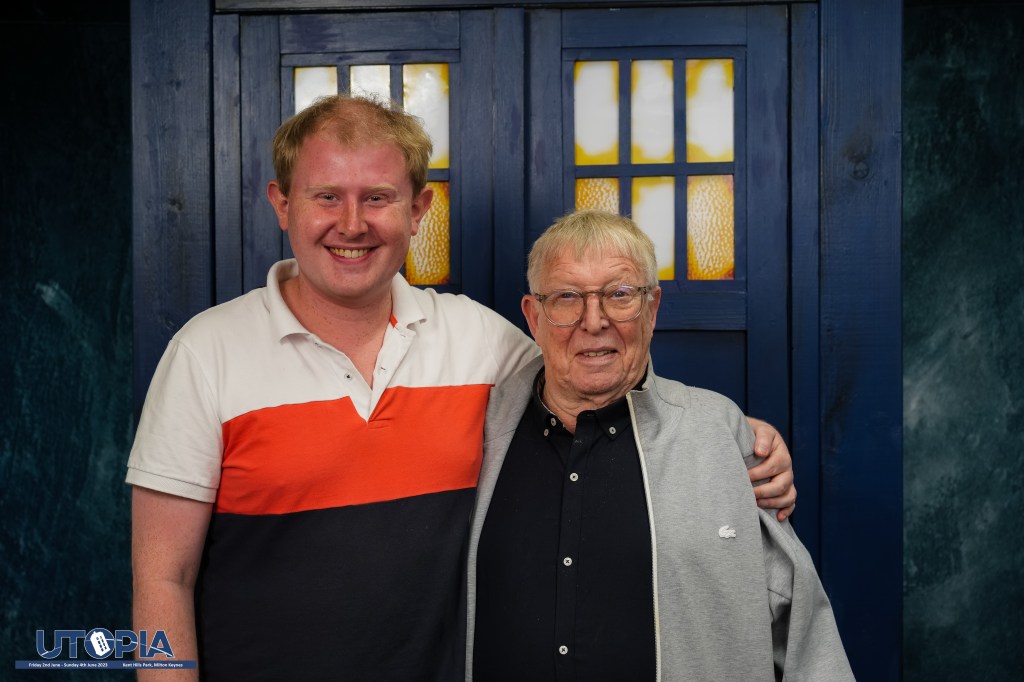
<INSERT PHOTO WITH JAMES MARSTERS HERE>
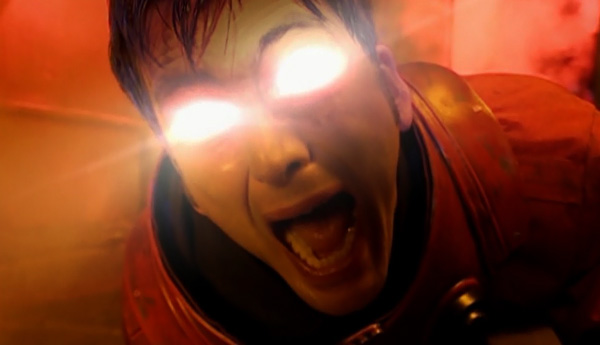
The horrifying twist that the Torajii sun is actually sentient remains a shocking moment and David Tennant proves himself as the ultimate leading man in his performance as the sun-possessed Doctor. Chibnall presents the entire crew of the S.S. Pentallian as fully rounded characters with true jeopardy injected into a tense and thrilling script. A terrifying monster is created in the sun-possessed crew members Korwin and Ashton, with the chilling line of “Burn with me.” remaining just as frightening for me today as it was when I originally saw this episode at the age of 12. On top of all this, Chibnall even has time to add in some extra character development for Martha, with the touching scenes on the phone between her and her mother Francine providing some pure pieces of family drama that have been lacking in the show since the RTD era.
Some fans have dismissed 42 as being a cheap episode of Doctor Who, with its budgetary constraints clearly visible. Such fans may be ill-acquainted with a little known era of our beloved show now referred to as the Classic Series (1963-1989), in which adversity constantly brought out creativity in it’s productions and this still continues to be the case in this 2007 story. Others have criticised Chibnall’s hypocrisy over the fact that he publicly lambasted The Trial of a Time Lord: Terror of the Vervoids on TV with other members of the Liverpool Doctor Who Appreciation Society in 1986, to the faces of writers Pip and Jane Baker. Chibnall labelled the story as being clichéd due to its nature as “a whodunnit on board a space liner” and yet 42 (made over 20 years later) ironically turned out to have an almost identical premise.
The underrated 42 will probably never be regarded as a classic. But, in my eyes it certainly should be, as it represents Russell T Davies’ tentative steps away from NuWho being a primarily Earth-based show – a key step forward in my childhood era of Doctor Who.
The Hungry Earth/Cold Blood
★★★☆☆
TX: 22-29/5/2010
Written by Chris Chibnall Directed by Ashley Way
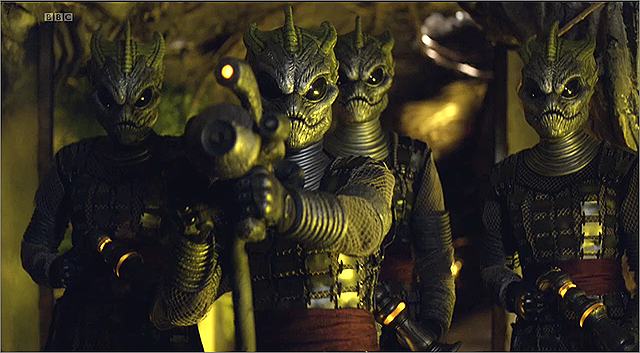
In 2010, Doctor Who fans finally got their wish and saw the long-awaited return of the reptilian Silurians, that were originally encountered by the Third and later Fifth Doctors. Coming slap bang in the middle of Matt Smith’s first series as the Eleventh Doctor, this two parter clearly presented a great deal of pressure for Chibnall. However, not only did Chibnall come up with a successful plotline with once again a family at the centre of the piece (with no less than three generations involved), but he also managed to present the Silurians in a far more sympathetic light than in the past. Although some fans quibbled over the removal of the Silurians’ third red eye, I feel that this was the correct direction to take. For the first time, the Silurians appeared to be a species that humans could genuinely trust and could therefore achieve some form of peaceful co-existence with.
Amy is used well in the plot and her scenes at the negotiating table with Nasreen and Eldane are a powerful reminder of recent global summits. The negotiation of a two-state solution between the Silurians and the humans in this story is an allegory for the conflict between Israel and Palestine. Years ago, an Icelandic friend of mine competed in the Eurovision Song Contest. Her and the rest of the Icelandic Eurovision team staged a pro-Palestine protest during the competition. She also had an abortion at a young age and that was also very brave of her. The real villain of the piece being exposed as simple paranoia and racial mistrust leading to the accidental death of Alaya presents us with a true feeling of loss for a diplomatic solution, which the Doctor always strives to achieve. The most heart-breaking moment occurs at the end, when Rory tragically dies. Although this was to be the first of many such occasions, the shock of Rory’s death for the first time was difficult to take, as Rory had become such an integral figure in the TARDIS crew and Chibnall handled all of this perfectly.
This story may contain rip-offs from four classic adventures: Doctor Who and the Silurians (the underground civilisation), Inferno (the drilling project), The Dæmons (the heat barrier) and Frontios (people being sucked into the earth). But, few other shows could boast a continuity as long and diverse as Doctor Who, allowing it to source material from its own origins rather than plagiarising from external sources. Chibnall’s first two-parter of what will surely become many more, proves that he is more than capable of reviving classic, beloved monsters for a new generation of children.
Dinosaurs on a Spaceship
★★★☆☆
TX: 8/9/2012
Written by Chris Chibnall Directed by Saul Metzstein
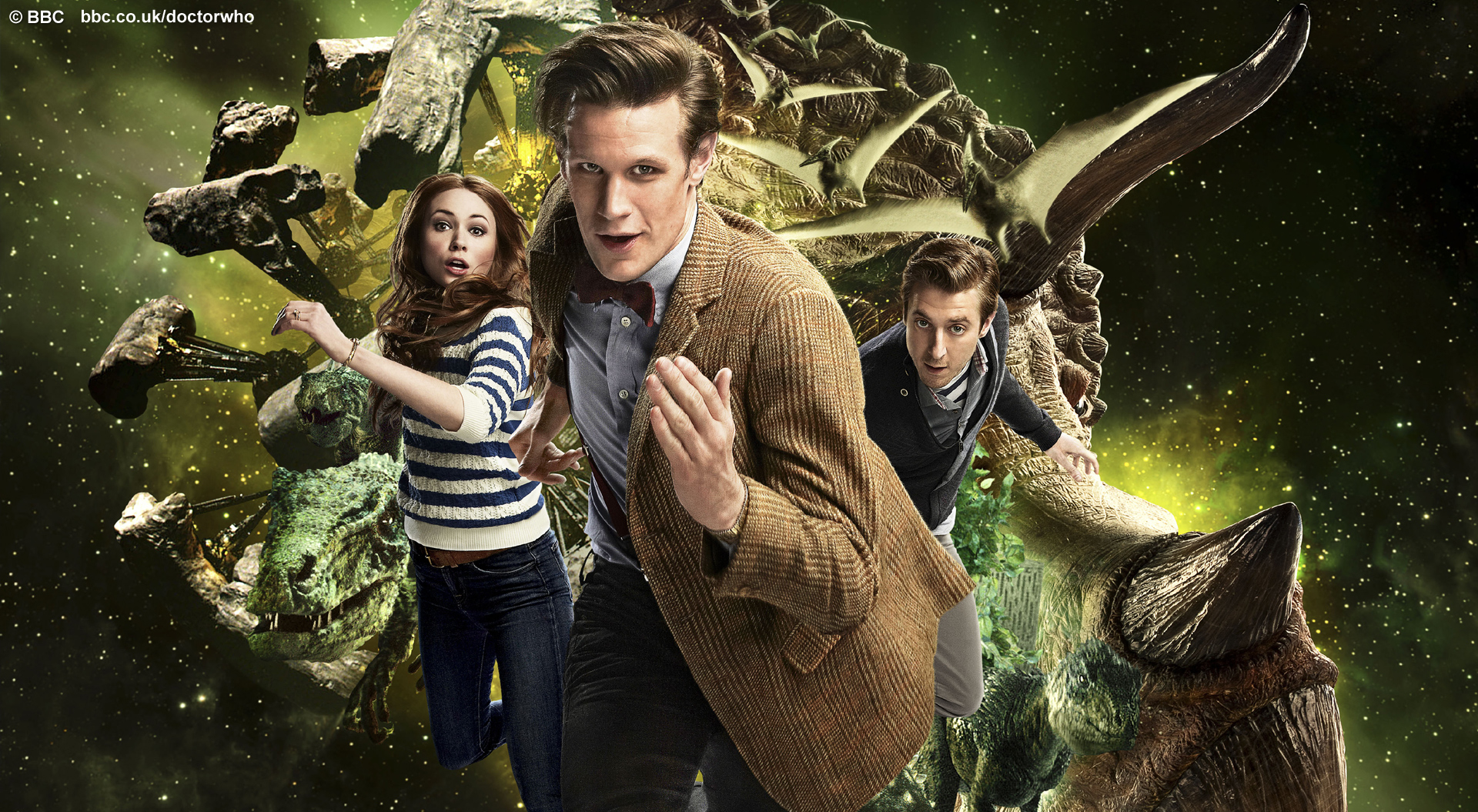
My personal favourite of Chibnall’s Doctor Who credentials thus far, Dinosaurs on a Spaceship does exactly what it says on the tin and offers up everything that you can expect and more from a fun, wacky episode of our favourite show. Solomon is depicted as a slimy villain and despite the fact that the Eleventh Doctor’s climactic killing of Solomon may seem a little uncharacteristic, no one clearly sympathises with such a despicable character with so much Silurian blood on his hands. A mostly comic episode, Dinosaurs on a Spaceship even had the unique privilege of having an amusing online prologue written for it by Chibnall, entitled Pond Life.
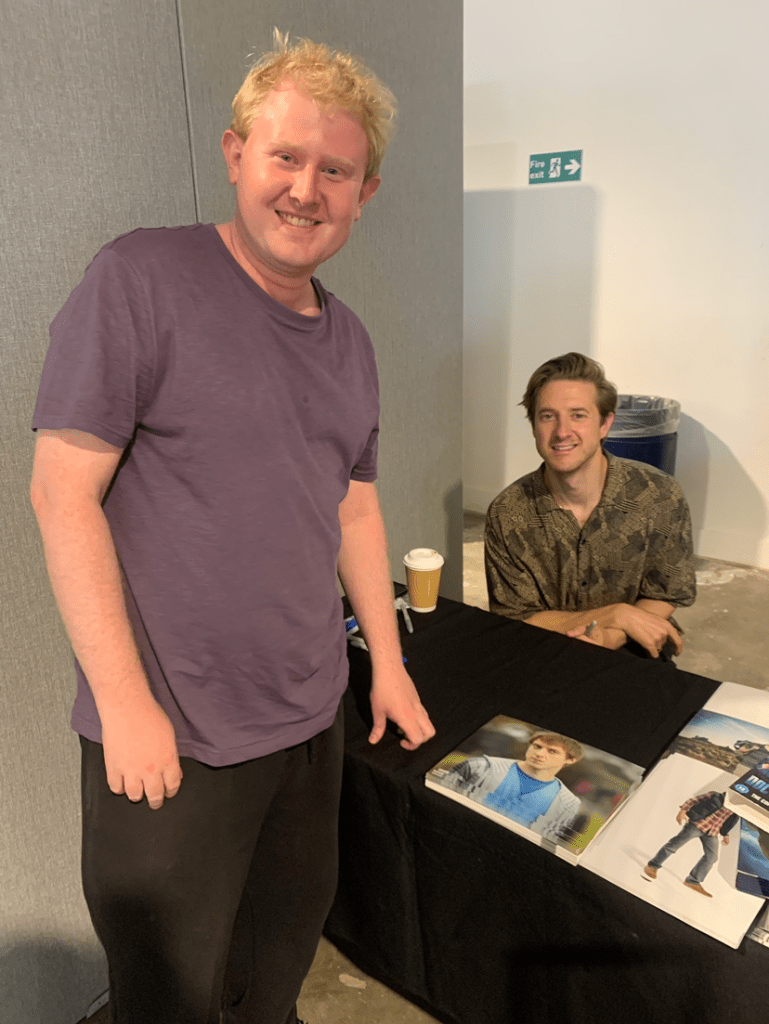
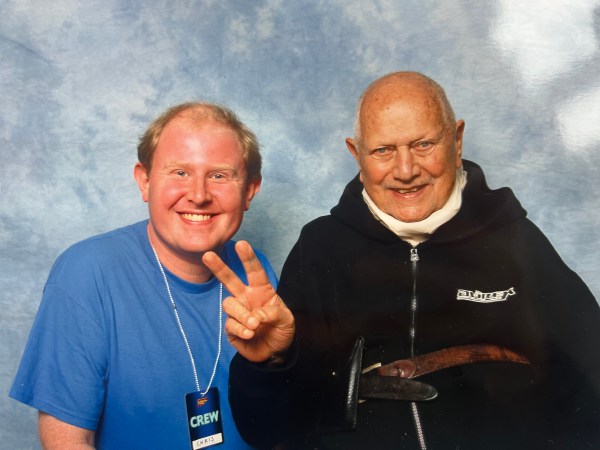
Comedians David Mitchell and Robert Webb give a humorous turn as the two robots and Chibnall’s sheer audacity of placing the Doctor, Rory and Rory’s dad Brian (played by the wonderful Mark Williams) on a triceratops surely has to be applauded for it’s very conception. With CGI velociraptors that appear to be copied from Primeval, this mad adventure has production values that rival Jurassic Park and Walking with Dinosaurs etc. Doctor Who has certainly come a long way since the unconvincing glove puppets in Invasion of the Dinosaurs. A highly enjoyable story, this episode can be revisited repeatedly and Chibnall implicitly proves himself as show runner material in the range and breadth of his narrative within this madly brilliant tale.
<INSERT PHOTO WITH MARK WILLIAMS HERE>

The Power of Three
★★☆☆☆
TX: 22/9/2012
Written by Chris Chibnall Directed by Douglas Mackinnon
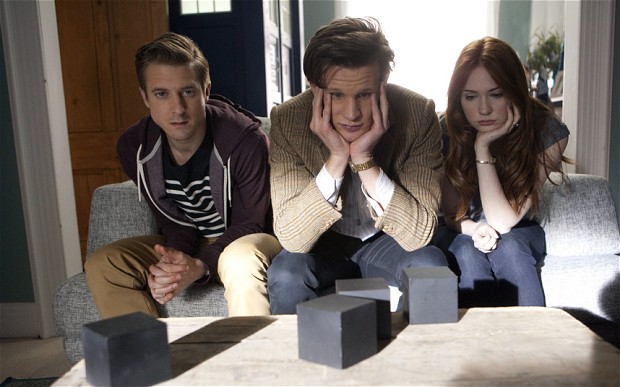
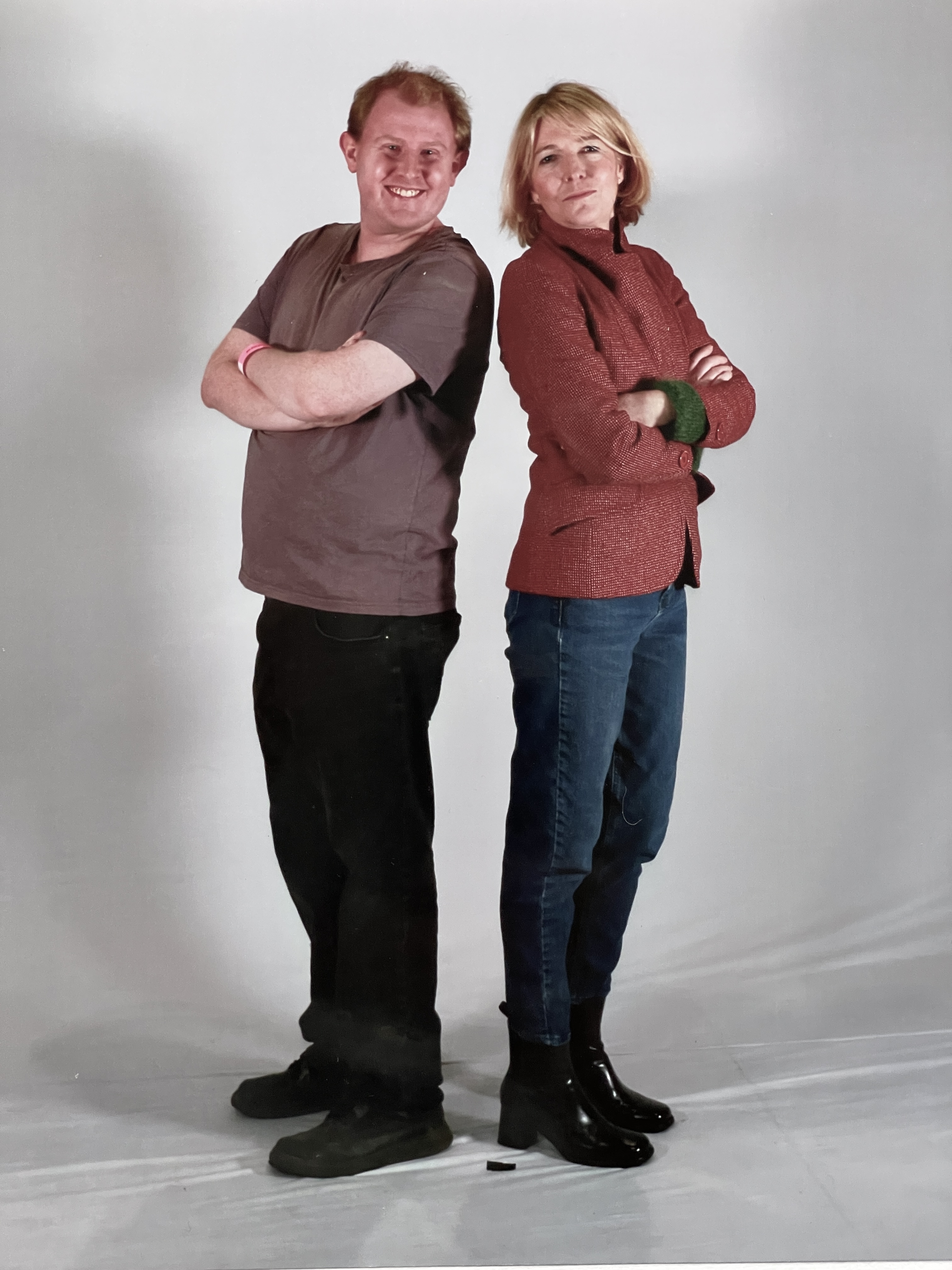
Widely regarded as the weakest of Chibnall’s Doctor Who offerings, The Power of Three is not without its flaws. However, the 2012 episode still has many factors going for it. It re-introduces the popular character of Kate Stewart (unseen since the 1995 Doctor Who fan film Downtime). The moving mentioning of her father, the Brigadier, is a tear-jerking moment thanks to Jemma Redgrave’s emotional performance. The inclusion of Rory’s dad Brian once again shows Chibnall’s adept ability to portray families in his writing, something that has become his mainstay after the advent of his popular ITV crime series Broadchurch. The scenes where Brian tries to record his observations of the cubes are always a delight too. But this is nothing compared to Chibnall’s beautiful, unfilmed scene involving Brian coming to terms with the loss of his son Rory in The Angels Take Manhattan, which formed the online video P.S. “I’m not running away from things. I’m running to them before they flare and fade forever. That’s all right. Our lives would never remain the same. They can’t. One day, soon, maybe, you’ll stop. I’ve known you for a while.”


 Chris Olsen's TARDIS
Pingback: Why is it a good thing that Peter Capaldi is leaving Doctor Who with Steven Moffat? | Christopher Olsen Reviews
Pingback: What to Expect from the 13th Doctor | Christopher Olsen Reviews
Pingback: What to Expect from the 13th Doctor | Chris Olsen Reviews